Jordan Fitness

5 Things to Consider for your Functional Area/Facility

By Jordan Fitness Director of Education, Allan Collins


1 - User Demographic?

For any product that a business wants to promote or sell, they have to look at the demographic they are trying to attract with it. If you are converting an area within your facility to a functional space, then what is the main demographic of your members that you want to “push” to use it? A functional area for an older customer group, would be slightly different than that of a younger group. This also applies to difficulty as well, as some rigs are set up for challenging Crossfit style workouts, which many average gym users would find impossible,


2 - Changeability?

How easy it is to change the layout of your new facility or functional area? Everyone gets bored after a while, and if your space looks the same in six months, the users will start to get bored - even if they can’t identify why. We recommend painting a wall a new colour every other month (this shows members you are continuing to invest in your business), new wallpaper designs every 6-12 months, and changing the layout of your training area.


3 - Add ons?

Does you functional training rig allow you to “add on” sections as you wish? Or change the arrangement of monkey bars? Do you have the space or budget to buy some new equipment every quarter (even if it’s just a few hundred £s)? As new products are unveiled at our annual tradeshows, it is better to be able to have new “toys” for your training team and members to play with to offset the boredom factor.


4 - Space?

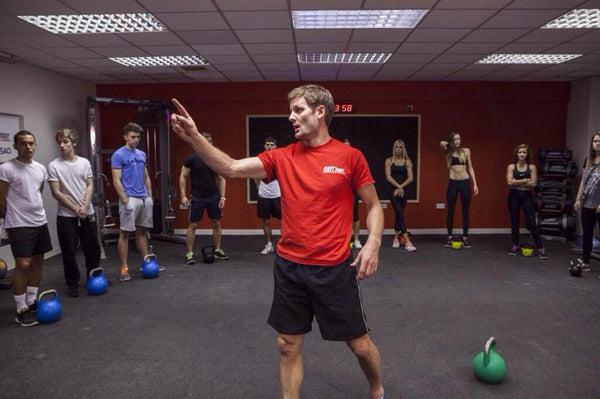
The main issue that trainers complain of is a lack of space. It is critical to move and perform our nine movement patterns for good functional training (and therefore results), but many club managers just “stuff” equipment into a functional space to fill the area. It is much better to have equipment stored at the side, on racks, or on the walls, to free up the actual training area to its fullest potential. Whether it’s a kettlebells session, pad work, plyometrics, strongman or vintage training, or just playing with the ropes, your PTs and members will have the space to do what they want.


5 - What’s this for?

You have to know what equipment is good for, before you buy it! Your sales team needs to know what it is to sell it to members! Your fitness team needs to know how to use it to get results safely! And, your members have to be shown and persuaded to try new things to get the results they want! Building a new functional area or facility is not enough - you have to educate buyers, sales, fitness and members to get the most out of your new functional investment.


Allan Collins is Director of Education at Jordan Fitness (www.jordanfitness.co.uk) and author of the new Complete Guide to Functional Training.


Written by Jo Evans — April 24, 2013

Why is Training Movements better than Training Muscles?


Why is Training Movements better than Training Muscles?

When many people sit down to write their training programme, they will think about exercises in relation to muscles and try to include an exercise that works all of the muscles of the body (chest, shoulders, arms, back, core, glutes, thighs, hamstrings, calves). This may be accomplished within a single session (whole body) or over several sessions (split programme), where different body parts are worked on different days. This is what is taught on fitness instructor and personal trainer courses, but is an outdated way of thinking about programming. For example, look at the 2 whole body sessions below:


Session A


Session B

Barbell Bench Press


Press Ups

Leg Extension


Squats

Lat Pull Down


Pull Ups

Leg Curl


Romanian Deadlift

Lat Raises


Shoulder Press

Bicep Curls


Supine Rows

Back Extensions


Farmers Walk

Side Plank


Cable Woodchop

Crunches


So which session is more effective? Well it’s Session B, but let’s look at some reasons why:


1.         A press up would work the same muscles as the bench press, but would also work the anterior core muscles (stomach) so we wouldn’t need the additional crunches at the end.

2.         Squats are far superior to leg extension - not only do they work the quadriceps, but they also work the glutes, hamstrings, adductors, abductors and core (particularly the back). They result in greater strength, size and energy expenditure.

3.         Although Pull Ups and Lat Pull Down may seem identical exercises, they are not. The Pull Up requires much greater core and shoulder-scapula stabilisation, more grip strength and results in much greater energy expenditure (for fat loss).

4.         The Romanian Deadlift (RDL) and Leg Curl both work the hamstrings, but the RDL works the glutes and back muscles (negating the need for the back extensions later on).

5.         The Shoulder Press will work the deltoids (like the Lat Raises), but will also work the upper back, shoulder stabilisers and triceps.

6.         Supine Rows will still work the biceps, but will also train the horizontal pulling muscles - the back of the shoulder, and upper back muscles, as well as the erector spinae back muscles and even the glutes and hamstrings to a lesser degree.

7.         The Farmers Walk (if performed with a single weight on one side) is far superior than the side plank for lateral core activation - but is also brilliant for calorific expenditure, knee, hip and ankle stability and even anaerobic fitness.

8.         The Woodchop will work the body in the transverse (rotational plane), which is markedly undertrained with most people in the gym and will work the lateral and anterior core muscles.

9.         The Press, Pull, Squat, Lift, Rotation, and Moving/Carrying Load movement patterns are all worked in perfect symmetry in Session B, whereas just the Press and Pull patterns are properly worked in Session A. Even then the Lat Pull Down and Bench Press do not balance each other out as exercises, no prolonged training this way can result in muscular and postural imbalances, and can eventually lead to shoulder problems.


In the end both programmes may seem similar, but Session A has been devised to work certain muscles, whereas Session B has selected exercises based on movement patterns instead. As well as being easier to programme this type exercise selection has a number of additional benefits:


           Training Movements will inherently have a much greater carryover for improved posture, health, strength and the ability to perform your normal daily tasks, because these actions will more closely mimic the movements that make up your day, such as walking, climbing steps, lifting and carrying heavy items and many other normal human movements.

           Training Movements will have a greater carryover to sports performance, since the movements that make up those sports can be replicated and improved in the gym. For example, rowing is made up of the squat, lift, pull and rotation patterns, so focusing on the patterns not just the muscles will help to make you a stronger, faster rower.

           Training Movements with large, compound exercises will produce a greater hormonal effect that smaller isolation exercises that don’t mimic movement patterns. These hormonal changes can increase fat loss, improve sleep, improve bone density or facilitate greater increase in muscle mass (hypertrophy) - depending on the structure of your training programme.


If this sounds quite a new way of thinking - well it is and it isn’t. Many experts are presenting this as “the new way to train”, but this actually was the original way we trained. In ancient Greek and Roman times, “exercise” was mainly for the soldiers to condition themselves and would involve running, lifting, throwing, fighting, wrestling, riding horses, shooting arrows and agility work. Even in the early 1900s, Vintage athletes involved in Strongman and Bodybuilding shows would advocate the use of Training Movements Not Muscles, rather than “cultivating muscle at the expense of strength”, and would focus on getting better or stronger at key movements. Arthur Saxon in 1905 wrote “judge a man by his capabilities as an athlete, whether a weightlifter, wrestler or not, and not by the measurement of his biceps or chest.” They would squat, lift heavy weights above their head, climb ropes, wrestle, fight and juggle kettlebells, and because they were simply training the key human movements, they would “leave the muscles to look after themselves”.


So rather than following a 1970s approach to training, follow the NEW primal way of exercise, and experience how much more effective, challenging and enjoyable it can be.


Allan Collins is Director of Education at Jordan Fitness, and is the author of the complete guides to kettlebell training, functional training and exercise physiology

Written by Jo Evans — April 24, 2013

The new Competitive Advantage……Education

Every club manager is always looking for a new competitive advantage over other clubs. Many of the organizations such as IHRSA, ACE and the ACSM are highlighting qualified, highly educated and knowledgeable trainers as a key trend within our industry for 2012-2013.

So why are ‘educated trainers’ receiving attention as being a key area? Well, in my mind, it boils down to two key areas – results and community; both for attracting clients and (more importantly) retention. Rather than selling membership based on price, many clubs are focusing on selling the results that the client is seeking (and then having the educated staff to deliver these results). These clubs believe that if a member is achieving and keeping their desired results, why would they leave to go to another club? One of the other key aspects for retention by these clubs is having members feel like they belong (the same reason why social media is so popular). Staff that knows your name, your goals, and other members that interact with you means your facility becomes more than just a place to exercise, it becomes a social community. Pulling you away from a community, in which you are an integral part, will be much more difficult than a gym where no-one cares if you come or not. So retention again will be improved greatly by having educated and motivated fitness staff that are focused on a service that includes unparalleled customer interaction.

To give an example - I had a customer ask me the other day “after I have installed our new functional area from Jordan’s, what is stopping a competitor copying everything I’ve done - equipment, flooring, colours, wallpaper designs – and then undercutting me.” Well put simply, nothing – nothing would stop a competitor copying everything you do. So, how do you differentiate the service or product you provide to your customers? The simple answer is your staff, in particular the staff that delivers your fitness service. Having highly motivated, well qualified, hugely knowledgeable (yes, it is different from being qualified…) is something that no competitor can replicate. It also is the key factor for member/client retention since it is these people that will ensure that your members are achieving their goals, as well making them feel part of your ‘community’.

Traditionally, the focus on having top class fitness staff has not been a key priority for certain clubs (I know many, for example, that pay the unqualified receptionists more that the highly qualified fitness trainers), but it seems that hopefully the tide is turning in this area.

Written by Jo Evans — December 17, 2012

Building Guns - the Pros and Cons of isolated Arm Training

Many refer to the development of arm strength and size as “building guns”, a mid fourteenth century reference that defined a gun as "an engine of war that throws rocks, arrows or other missiles". More recently, in baseball terms in 1929, it is described as a player’s arm is his gun or his wing. A good gun means that the possessor has a strong arm”.

In fitness terminology, Arm Training refers to the development of a large upper arm through biceps and triceps training. But, is isolation training of these upper arm muscles the most effective method of developing a truly “functional gun”, or should all arm training consist of functional compound exercises? Is isolation training at all necessary if you are including appropriate pulling and pressing movements within your training programme? Well, like most arguments, there are both pros and cons to be explained:

Cons of Isolation Training:

1.    Not Foundation Movement Patterns.

Exercises like the French Press, Supine Triceps Extension, Kickbacks, Seated Hammer Curls and Reverse Curls do not fall under one of the nine foundation movement patterns (squat, lift, press, pull, smash, rotation, gait/locomotion, moving/carrying load or fighting). Although elbow extension and flexion form part of the press and pull patterns respectively, and thus these exercises would be classified as supplementary exercises suitable when individuals cannot perform the complex movement pattern, or to supplement exercises that work the full pattern. Modern concepts of functional training would suggest that training should be focused on using exercises that will have the greatest carryover to the individuals daily activities, occupation or sport (the principle of specificity) - and exercises that mimic the primal movements should facilitate this.

2.  Decreased Radiation Effect.

It is well known that strength training only the upper body can cause improvements in squat strength. On the flip side, including squats within your arm training programme will facilitate greater increases in arm strength and size than just the arm training alone. So, how can squatting help to increase arm size when there is little to no overload on the arms? Well, the answer is called the Radiation Effect, and is the same reason why rehabilitation specialists will advise training the non-injured leg whilst the fractured leg is still in plaster. There are both neural and hormonal changes during training, and the larger the exercise the greater the Radiation Effect. Exercises like the Deadlift, Squat, Cleans and Snatches will facilitate strength and growth changes across the whole body that will also benefit lesser-trained or non-trained areas like the upper arm. Isolated training on the biceps and triceps, with exercises such as previously mentioned, will not facilitate this type of Radiation Effect, or at least not to the same degree, because the muscle mass and neural overload are much, much less than these larger exercises.

3.  Limitations for Arm Development.

Many individuals striving for increased arm size will continue to focus on isolation style biceps and triceps exercises, even when their gains have plateaued. The reason for this is the body’s innate ability to maintain balance in relation to muscular development. Have you ever seen a guy with 20 inch arms and a tiny back and legs? No. The reason is for every extra inch you may want to put on your arms, you need to add an additional 15-20 pounds of muscle in total to your lean body mass. Small traps, a tiny back, and skinny legs may all be the reason for your small arms - yet another reason to engage in exercises like the high pull, squat and deadlift to build these ‘weak’ areas up.

Pros of Isolation Training

1.   Increased Neural Drive.

Basic principles of training 101 - increased overload = increased potential for adaptation. If I ask you which exercise will allow you lift more weight (with correct technique), which would you say - standing hammer curl or seated hammer curl? The answer is the seated curl because of what we call Increase Neural Drive. This means that less energy is ‘wasted’ on the stabilisers and fixators because the seated is now doing some of the work of these muscles. This means that more neural energy is available for use by the agonists (in this case the elbow flexors), and thus a slightly heavy weight (and more overload) can be lifted. So, now we have somewhat of a conflict. Functional theory suggests that whole body movements will have a greater carryover, but stable isolation exercises will allow for a greater overload, and thus more adaptation.

2. Increased Volume on specific areas.

Pull ups (particularly weight pull ups) are great for improving biceps strength. But what if you can’t perform a pull up, due to a weak grip or weak elbow flexors? Eccentric-only pull ups will help develop your strength, but performing additional grip and biceps work to ‘supplement’ that exercise. As such, isolation exercises like a hanging reverse crunch, hammer curls and reverse curls may not seem that functional, but these supplementary exercises can still have a functional carryover if programmed and applied properly. Use of these types of supplementary exercise should be to build up weak areas so that you can perform functional movements (like the pull up), or to help you achieve a greater overload on a particular area. For example, if your session consists of 2-4 large, compound, functional exercises to work your back, is there anything wrong with performing 1-3 additional more isolation exercises to completely fatigue the elbow flexors? You cannot perform more compound exercises (or sets) because they are too neurologically fatiguing, but you can perform more of the less demanding isolation exercises.

Overview

In relation to developing not only strong upper arms, but also functional arms, I recommend the following:


1.   Perform exercises that work the primary upper body movement patterns (press and pull), through all vectors. For example, the Press Pattern - Press Upwards (overhead press), Press Downwards (dips), Press Forwards (close grip supine dumbbell press). These should be the basis for your arm development.

2.   Supplement these exercises with suitable varied isolation exercises such as reverse curls, hammer curls, spider curls etc, that will work the different muscles or motor units of the elbow flexors or extensors.

3.   These supplementary exercises should not replace the compound, functional movements, and as such performing in stable positions (seated, supine) for greater neural drive is not a problem.

4.   Perform large, functional exercises, such as squats, deadlifts or the olympic lifts in order to achieve the Radiation Effect, which will enhance the adaptations from any arm training you do perform.

Work on common weak areas for arm development - the grip and traps are two of these - another good reason for performing high pulls, the olympic lifts, farmers walks and fat bar exercises.

Written by Allan Collins

Allan Collins is Director of Education for Jordan Fitness, and is the author of 3 books and 80 courses. He is a strength a conditioning coach and a functional training expert and has been in the fitness industry for 18 years and a tutor for the last 10 years.

Written by Jo Evans — November 29, 2012

Combining Vintage and Modern Weightlifting Exercises

By Allan Collins

One question which seemed to be on the lips of those that watched our Olympic Weightlifting demonstrations or attended our Vintage Training REPs session at LIW this year was, “How do you combine Vintage exercises with Modern Olympic Weightlifting exercises?”


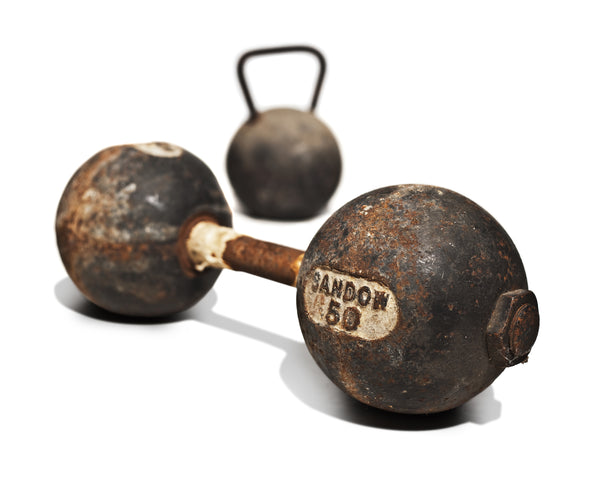
Vintage exercises were commonly performed in the late 1800s and early 1900s, as the era of fitness and exercise was increasing in popularity with proponents like Eugene Sandow. Examples would include the one hand Barbell Snatch, Windmill, Turkish Get Up, Overhead Squat, the Side Press, the Bent Press, the Two Hands Anyhow, or the Get Up Sit Up. Many of these drills focused on lifting a barbell with one hand, and as such would require more lateral core strength, lateral hip stability, grip strength and wrist stability than similar two hand variants. Although sometimes performed with Kettlebells, it is highly unusual to see gym users performing barbell versions of the Windmill, Turkish Get Up or Snatch. But these were the original versions and have several advantages and safety benefits over their Kettlebell derivatives.


So what are the Modern Olympic Weightlifting exercises? Well, if you watched the action from London over the summer, you would have the athletes performing the two hand barbell Snatch and the two hand barbell Clean & Jerk. These entail lifting the weight above the head with two hands in one or two movements respectively. Because they are performed with two hands, these lifts enable significantly more weight to be lifted. These lifts have a great carryover to improved acceleration, vertical jump height, relative strength and subsequent athletic performance in many sports, which is why they form the cornerstone of strength and conditioning programmes.


So we use the 2 hand modern lifts (the Snatch and Clean & Jerk) as a more stable way of overloading the lifting, pulling and squatting muscles, allowing more weight to be lifted, but keeping it more in the sagittal plane. The Vintage single hand lifts, and presses will use much lower weights, but will allow greater single arm strength, grip and wrist strength, as well as more lateral core and hip stability to be developed. They also provide more stress in the frontal and transverse planes, allowing for development in all 3 planes of motion. In addition, the slow tempo vintage exercises like the barbell Windmill, Turkish Get Up, and Get Up Sit Up were the basic screening drills used in Vintage times to screen and develop mobility, shoulder stability, core stability, hip stability and proprioception. Although their use has decreased over the decades, their benefits to the ‘average’ gym user cannot be underestimated.


I believe that correctly understood and taught in a logical and progressive programme, all of these drills, both modern and vintage, can have an excellent carryover to improving the functional and sporting ability of the average gym user or athlete. They also provide new and interesting ways to stimulate adaptations (improvements) through unusual lifts. Jordan Fitness’ new digital instructor courses on both Olympic Weightlifting and Vintage Training will allow trainers to fully understand the correct way to coach and apply these exercises within our functional training philosophy.


Written by Allan Collins — September 26, 2012

30-Minute Workouts


The short fast training session is quickly becoming more of a usual occurrence in many health clubs. Previously every gym user was spending at least an hour in the gym and every class was scheduled for 60 minute duration. So what has changed? Well, for gym users there is significant research that shows that sessions lasting longer than sixty minutes can have a detrimental effect on your hormone levels, with elevated Cortisol (stress hormone) and subsequent suppression of your anabolic hormones. Both of these effects are the exact opposite to what most gym users are looking to achieve - reduction in bodyfat and a maintenance or increase in muscle mass.

Shorter sessions are also associated with HIIT, or High Intensity Intermittent (or interval) Training. This type of training is receiving a lot of interest at the moment with various research looking at the benefits of short, hard interval, with rest periods in between, to improve anaerobic and aerobic fitness, glucose tolerance and insulin response (related to NIDDM), lipid profiles and even bodyfat reduction. This could be multiple sprints on a treadmill or bike, sets of kettlebell swings or even sled pushing or tyre dragging, but the idea is to perform these for 30-90s to illicit a build up of lactic acid. This build up is linked with challenging the individual’s anaerobic threshold and also with increases in (natural) growth hormone release. Many of the personal trainers that we work with at Jordan Fitness are now only training their clients for 45 periods, because they physically cannot be trained this way for a full hour.

Now many group training classes, so as the ones we help implement at the Klick Fitness Clubs, are realising that most gym users, if pushed hard, neither require, nor can actually tolerate, a full sixty minutes of this type of training. They are pushed within their abilities, and can achieve more benefits than plodding around a gym for an hour. Most users prefer to be able to get in and out of the club, within a 45 minute period, and this can have a great impact on user adherence since they know they don't have to dedicate as much time each week to achieving their goals. The clubs also like it because the users are spending less time within the facility with each visit and it means that they can timetable more group training classes within any set period.


Allan Collins, Director of Education, Jordan Fitness

Written by Jo Evans — May 24, 2012

Fitness for kids

With the current focus surrounding children's health and the rise in obesity, type 2 diabetes and other metabolic related issues, fitness for children is receiving much more attention than previously. But trying to get an idea about what type of fitness training children like can be difficult for many people to put their finger on. In our mind it is relatively simple - it should be fun. We see the same thing with adults. They get bored of doing the same old exercises and training week in week out.Children get bored, and get bored quickly, so any exercise has to be fun, engaging and ultimately beneficial for their health. 

Whilst supporting our European distributors at their show, I saw a great example of this with five young teenagers who spent about an hour on our stand playing with the medicine ball rebounder. We would show them a game which would require them to run, jump, throw and catch and they would happily perform this for a while until they got bored. We would show them another where they compete against each other in teams and off they go again, happily running around, blissfully unaware of the benefits to their cardio-respiratory system, improvements in hand-eye co-ordination and the calories being expended. 

 Add this to other equipment like the training ropes, hurdles, ladders and sandballs, and a group of kids can happily train for hours, running around and performing multiple movement patterns, improving mobility and core strength, whilst all the time HAVING FUN! Stop and ask them to perform sets of bicep curls or lateral raises and you soon start to see their eyes glaze over and look at other stands for something to occupy their attention. 

We don't have to be getting our children to lift heavy weights or plough away on rowing ergometers or treadmills for hours on end to get them to be active. Make it fun, make it varied, sometimes make it competitive and make it challenging but make it doable, and children will happily exercise to the ideal levels, like we all want them to. 


Allan Collins, Director of Education, Jordan Fitness

Written by Jo Evans — May 24, 2012

The Importance of Functional Zones

Virtually every club and national operator is becoming aware of the benefits, versatility and importance of a functional training area within their facilities. They know that club members are now expecting to see areas with kettlebells, sandbags, suspension systems and a variety of other 'funky' equipment, just as they expect to see areas for cardiovascular training, freeweights and stretching. It is quickly becoming much more of a standard expectation, when prospects are looking around the club, as they have seen these areas being used on programmes like the Biggest Loser.


Many of the clubs and national operators are trying to keep up with their competitors to ensure they continue to attract new members and retain current ones with investment in modern trends in functional equipment. However, it can difficult for managers or purchasers to know what type of functional equipment is most suitable. Your client demographic and what type of training they will want to perform; as well as whether you wish to run small group training sessions will help to dictate both the layout and equipment requirements for your area. 


For example, let’s say you run a club that has a large student membership and the athletic clubs, such as football, rugby, netball and hockey, will want to use it for their sessions. You would want to have one or more weightlifting platforms with elite bars and bumper plates so they can perform the Olympic lifts that the strength coaches will be advocating. Some 'normal' clubs may have these as well but it is more unusual (it also requires that the staff had received adequate training on to both coach and demonstrate these lifts).  If you want suspension training systems, do you opt for gymnastic rings, with are more cost effective but a little more restrictive on the exercises that can be performed, or one of the more modern designs, such as a MiloKit or Jungle Gym XT? Well, if your users perform CrossFit style sessions and exercises, like the muscle up, they would prefer Gym Rings, whilst most other users would prefer one of the other systems. Then what about the anchoring points - wall/ceiling anchors / A-frames / Functional Training Rigs? Again, it would depend on space, what type of ceilings/walls and height restrictions, and whether you would like the space to be multipurpose, such as doubling up as squat racks, in which case a more expensive functional rig would be a better use of the space than an A-frame.


Like most areas, there are a lot of considerations about what to put in there, where to place it, cost restrictions, space limitations and training requirements. Consulting with one of the functional suppliers who can discuss your needs, advise on best layouts and equipment and produce a 3-D image or fly-through of your functional area will help to ensure that you are investing correctly and wisely and the space will be used as much as you wish for both unsupervised, personal training and small group exercise. 


Allan Collins, Director of Education, Jordan Fitness

Written by Jo Evans — May 24, 2012


Latest News

Latest Tweets